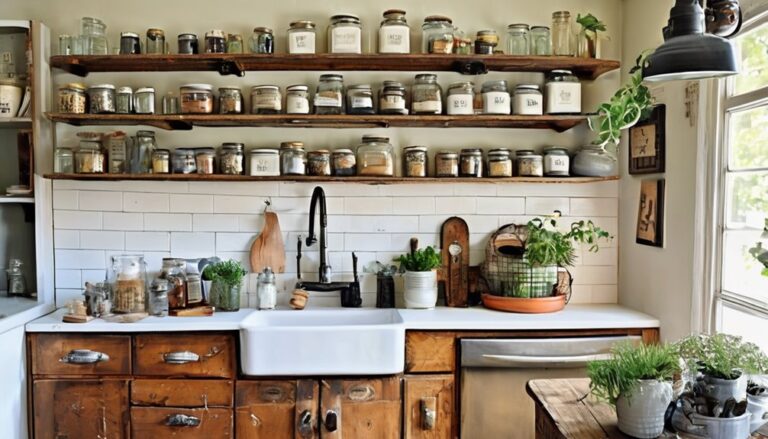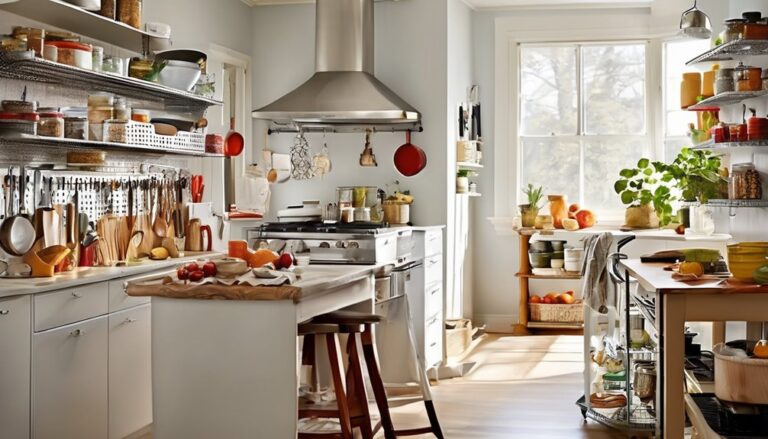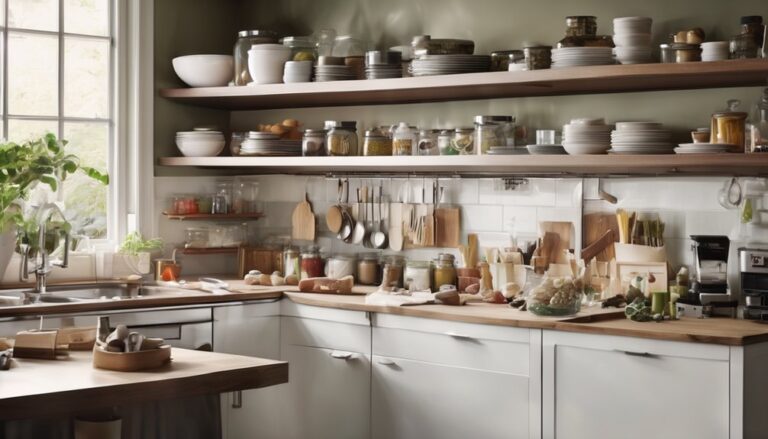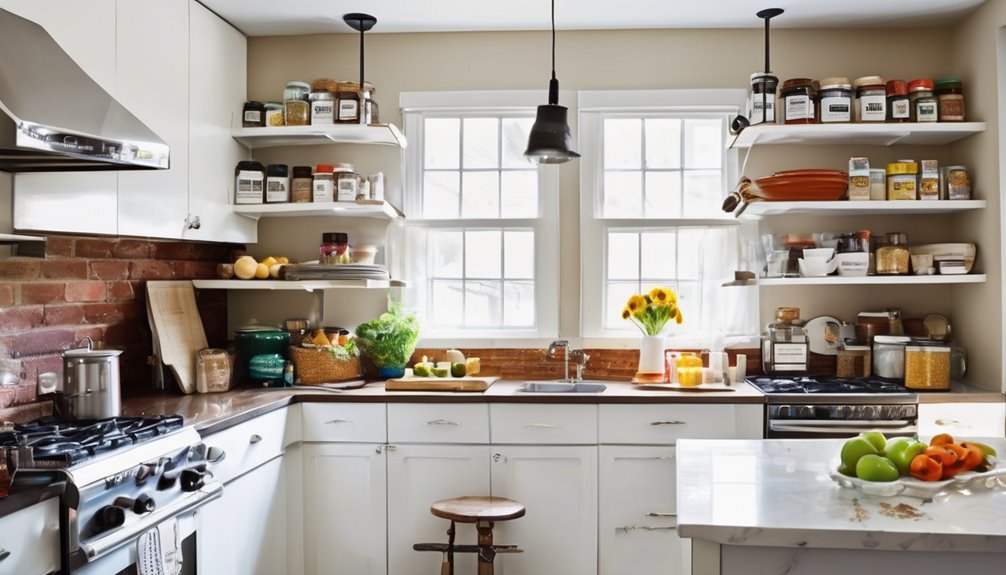
Maximize kitchen space on a budget by using doors, corners, and exteriors for extra storage. Mount slim racks on inside pantry doors and add magnetic strips on fridges for tools. Go vertical with tall shelves and peg rails to free counters. Reclaim underused spaces with fold-down work surfaces and corner organizers. Use uniform bins, color coding, and labeled inserts for quick access. Regularly reassess zones to keep clutter down and space calm—and you’ll uncover even more room to streamline your flow.
Key Takeaways
- Use door-mounted slim racks and magnetic strips to gain vertical, surface-free storage for spices, lids, and utensils.
- Install modular, adjustable shelves and pull-out drawers to reconfigure space without major renovations.
- Color-code bins and use uniform, transparent jars for quick access and cohesive organization.
- Create corner nooks and vertical shelving to maximize underutilized areas and keep counters clear.
- Implement routine cabinet checks and monthly reassessments to rotate items, remove duplicates, and maintain efficiency.
Assess Your Kitchen’s Sprawl on a Budget
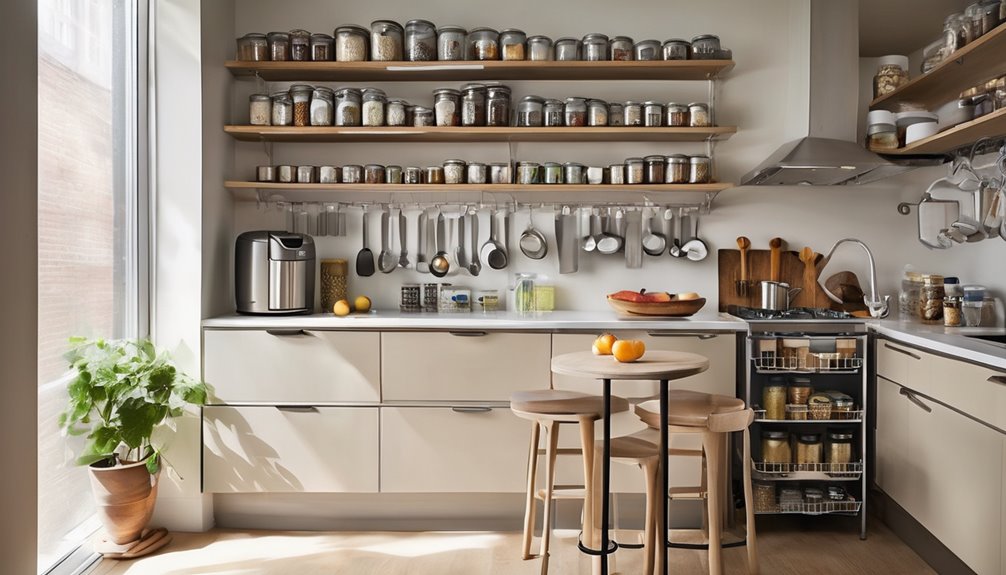
Assess your kitchen’s layout by noting how you actually move through it. You’ll map flow, not fantasy, so you can spot how often you backtrack or reach awkwardly. This budget friendly exercise centers you in practical, shared spaces, inviting collaboration rather than judgment. Begin with a simple loop: prep, cook, clean, serve. Observe bottlenecks, stray items, and underused zones. Use space maximizing ideas that fit your real rhythm—moving a chopping area closer to the sink, or placing frequently used tools within easy reach. Employ assessment tactics like a brisk timer test and a quick inventory of what you grab most. Sprawl evaluation then guides you toward few, meaningful tweaks that honor your home’s character and your belonging in it. 3D 360° circulation
Maximize Doors and Cabinet Exteriors for Extra Storage
If you’ve mapped how you move in the kitchen, you’ve already started seeing where doors and cabinet exteriors can do more. You can treat door exteriors as instant storage by adding slim racks, hooks, or magnetic strips for utensils, measuring tapes, and lids. On cabinet facades, install shallow, labeled bins or pull-out organizers behind doors to hold spices, wraps, or cleaning supplies without clutter. Choose uniform hardware and subtle rails to keep the look cohesive while maximizing function. Use transparent or labeled inserts to quick-identify contents, reducing search time. Keep height and reach in mind so items are accessible from your typical stance. This approach honors belonging—your space feels organized, intentional, and genuinely yours. Additionally, consider aligning interior shelving with the exterior enhancements to ensure a seamless, integrated storage solution budget-friendly optimization.
Vertical Storage Essentials for Small Kitchens
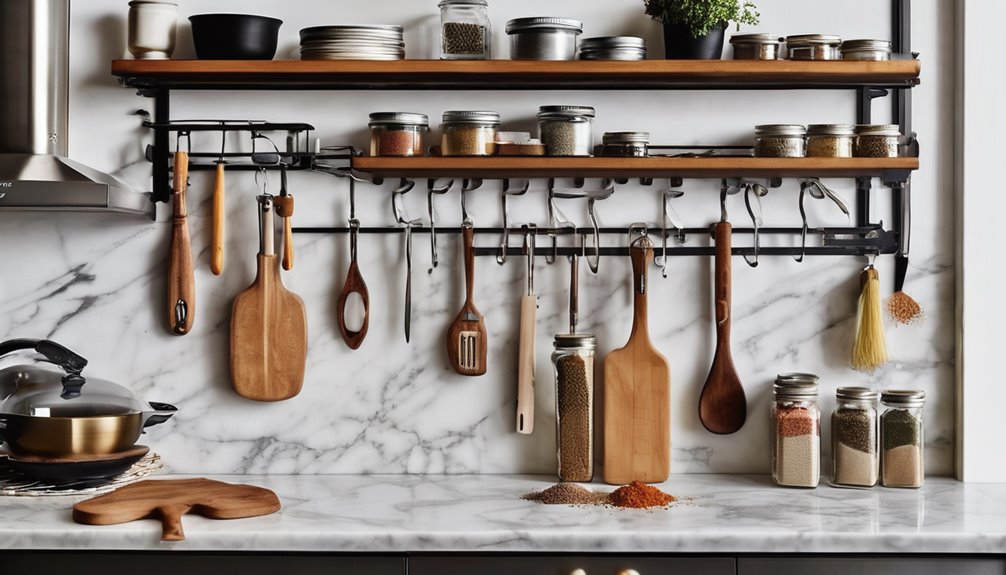
Vertical storage can transform a small kitchen in seconds. You’ll feel the relief as items breathe easy, walls gain purpose, and every inch earns its keep. Vertical shelving gives you immediate height advantage without crowding your counters, making essentials visible at a glance and within reach. Pair it with interior organizers that tame drawers and cabinets, so small tools don’t vanish into shadows. Choose modular racks that blend into your color palette, not fight it, so your space still feels calm and cohesive. A slim corner unit or peg rail keeps frequently used items accessible while freeing counter space for prep. With intention and simple components, you create belonging—a kitchen that supports you, not clutter you. a practical design
Underused Spaces: Doors, Corners, and Exteriors Reimagined
Doors, corners, and exteriors hold hidden potential to tidy your kitchen fast. You’ll see how small shifts transform flow, not clutter, with door reimagining and corner utilization guiding every choice.
Doors, corners, and exteriors unlock quick, calm kitchen flow.
- Mount slim racks on inside pantry doors to hold spices, lids, or utensils without stealing counter space.
- Create corner nooks with angled shelves for mugs, apps, or jars, turning dead corners into usable storage.
- Add exterior hooks and magnetic strips on the fridge or outside cabinet doors, staging frequently used tools at a glance.
- Integrate a fold-down workstation on a pantry or cabinet door to create a compact prep surface when needed space optimization and then tuck away.
This approach feels welcoming, practical, and belonging-focused. You’re not just organizing; you’re crafting spaces that invite family and friends to contribute, share, and enjoy a calmer, clearer kitchen.
Budget-Friendly, Durable Organizing Systems That Endure
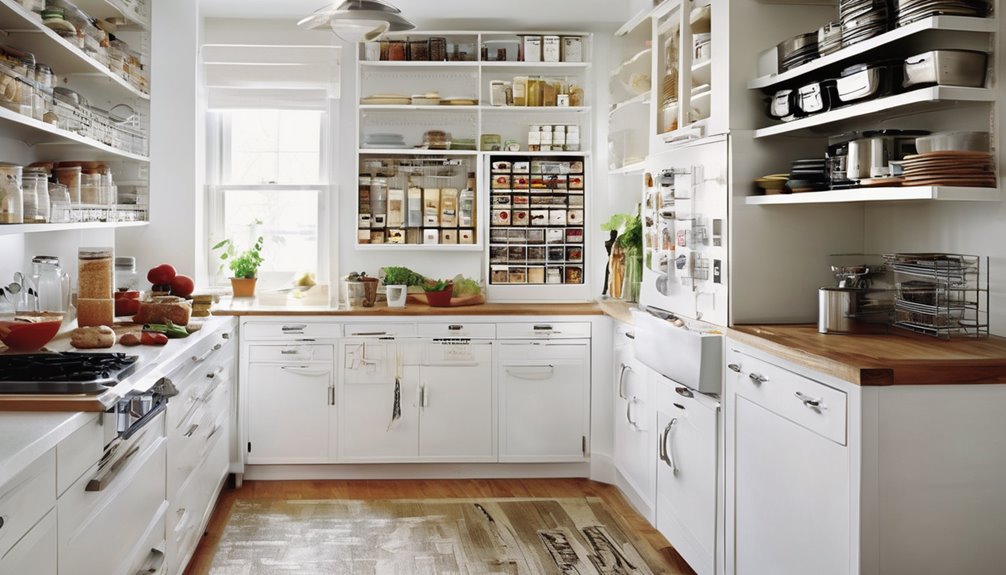
You’ll want durable, budget-friendly materials that last, so start with sturdy bins and shelves you can count on. Opt for modular pieces that snap or stack, saving space without rebuying as your needs change. This approach builds a long-lasting system that stays organized, neat, and easy to maintain.
Durable, Budget-Friendly Materials
Durable, budget-friendly materials keep your kitchen organized without breaking the bank, so you can invest in necessities rather than replace worn components. You’ll feel capable choosing long-lasting options that fit your space and budget, reinforcing a sense of belonging in your home. The same emphasis on stability and durability that HUANUO desks prioritize—steady, long-lasting performance—applies to selecting pantry organizers that withstand daily use over time 50,000 lift cycles.
Modular, Space-Saving Solutions
How can you maximize space without sacrificing durability or style? You’ll lean into modular, space-saving solutions that adapt as your needs change. Think modular optimization: stackable containers, adjustable shelves, and configurable wall organizers that breathe with your kitchen rhythm. Use space saving principles like vertical mounting, pull-out drawers, and labeled zones so every tool has a home. Durable materials—metal, solid wood, and high-grade composites—keep the system steady under daily use. Choose color and texture that feel like you, fostering belonging in shared spaces. Keep lines clean and interfaces intuitive, so setup feels welcoming, not fussy. By prioritizing modularity and clarity, your kitchen stays open, efficient, and effortlessly cohesive for years to come. durable materials
Long-Lasting Organization Systems
When you’re building on modular, space-saving ideas, the next step is an organization system that stays put and ages well. Long-lasting organization means simple, sturdy components that fit your rhythm and budget. You’ll feel confident, not crowded, as you reclaim counter space with durable bins, label-friendly shelves, and consistent sizing that makes maintenance a breeze. It’s about space optimization you can trust day after day, and budgeting strategies that stretch every dollar.
- Invest once in metal or high-grade plastic containers and modular rails that adapt with you.
- Label clearly and group by use, so actions become automatic.
- Choose adjustable shelving and pull-out drawers for easy access and fewer reconfigurations.
Small Layout Tweaks for a Smoother Kitchen Workflow
Small layout tweaks can dramatically speed up daily kitchen tasks. You’ll gain flow by prioritizing reachable zones: keep frequently used items within a smooth triangle between sink, stove, and prep counter. Align prep surfaces with the fridge so you never chase ingredients. Use clear labeling and consistent containers to reduce search time and decision fatigue. Group tools by task—baking, chopping, cleaning—so you’re not hunting for the right knife or towel every moment. Consider a pull-out spice rack near the stove and a slim trash/waste station within arm’s reach. Maintain a steady cleaning cadence by design, even during busy days, so chores don’t pile up. Plan budget rollouts for small upgrades that reinforce this rhythm, not disrupt it. Belonging grows as efficiency follows. Liquid-safe measures and features can further enhance reliability when you’re sealing foods to preserve freshness and reduce waste.
Quick Maintenance Habits to Preserve Space Long-Term
Keep your space in check with routine cabinet checks, so you spot leaks, loose hinges, or stray items before they pile up. Use a simple shelf zoning system to keep like items grouped and easy to reach, reducing clutter and wasted space. Add quick moisture control practices—dry spills right away and use mats or dehumidifiers in high-humidity spots—to preserve cabinet longevity. Regularly inspect for signs of wear and ensure you have sturdy, adjustable supports to prevent sudden sagging in shelves cabinet maintenance.
Routine Cabinet Checks
Routine cabinet checks are a quick, practical habit that keeps your kitchen organized and space-efficient. You’ll notice how small, budget friendly tweaks add up, making cabinet checks feel like care you give your space. These quick audits reinforce belonging as you share the space with loved ones who value order. Regularly verify that dishwasher-safe baskets and lids remain accessible for easy cleanup dishwasher-safe components, so maintenance stays simple and your setup stays tidy.
Shelf Zoning System
Shelf Zoning System helps you map your space for quicker access and less clutter. You’ll set zones for every shelf, aligning items by use, size, and frequency. With shelf zoning, you instantly know where to grab pasta, lids, or spices, reducing rummaging and wasted space. Practice quick maintenance habits: label sections, rotate seasonal items, and remove duplicates during weekly tidy-ups. Keep a simple budget organization note for replacements and rehoming decisions, so clutter stays contained. Visual cues matter—color-coded bins and uniform jars create a cohesive look that invites belonging. Reassess monthly, trimming items you never reach and adjusting zones as your needs shift. This system feels intentional, calm, and inclusive, helping you sustain maximum kitchen space without sacrificing accessibility. Zcyge Portable Espresso Maker for Travel (On-the-Go Battery Brew) presents a practical example of how careful design choices can support on-the-go efficiency, reinforcing the idea that well-organized gear contributes to smoother routines on-the-go efficiency.
Moisture Control Practices
Ever wonder how a dry, well-ordered kitchen stays that way? You’ll keep it that way with simple moisture control and humidity management habits that honor your space and shared needs.
- Seal gaps and vents to curb wisps of damp air, especially after cooking or dishwashing.
- Use breathable containers and dehumidifying lids to stabilize humidity without clutter.
- Ventilate during hot, humid days and wipe surfaces promptly to prevent mold and odor.
Frequently Asked Questions
How Can I Measure Cabinet Depth for Max-Fit Organizers?
Small as a pocket watch, you’ll measure cabinet depth from back wall to door reveal. Use a tape measure, note inches, and add a touch for clearance. For max fit organizers, aim for standard 12–15 inches depth and account for moisture control. Plan budget upgrades, rotate items, and use magnetic strips. This boosts pantry efficiency, avoids cabinet damage, and supports belonging as you customize. Measure, adjust, and rotate for best fit and calm, organized spaces.
What Small Budget Upgrades Deter Mold and Moisture Buildup?
You can start with budget upgrades like vented exhaust fans, moisture-control fans, and silicone-sealed joints to curb mold growth. Add a reusable dehumidifier bag in cabinets and keep air circulating with small passive vents. Use mold-resistant paint in low-sheen finish, and wipe spills promptly. Maintain humidity around 40-50%. Budget upgrades should feel attainable, not punitive, so you belong here by taking steady steps, prioritizing moisture control, and choosing finishes that celebrate your space.
Which Pantry Items Waste Space Most in Small Kitchens?
Pantry items waste space most when you overbuy perishable staples and store bulky bottles you rarely use. You’ll notice pantry wastefulness grows as jars clink together and expire. To optimize, group by category, shift to stackable containers, and keep a running list. Two word discussion ideas: “rotation routine.” This space optimization mindset helps you belong in a tidy, efficient kitchen. You’ll feel calmer, more intentional, and connected with a shared goal of smart, sustainable living.
How Often Should I Rotate Stored Items to Prevent Clutter?
You should rotate stored items every 2 to 4 weeks to keep things fresh and accessible. This rotation frequency helps you spot expired products and prevent clutter before it starts. As you tidy, group similar items, label shelves, and place often-used staples within reach. This simple routine supports clutter prevention, makes your kitchen feel calmer, and helps you belong in a space that reflects care, intention, and shared, tasty moments.
Can Magnetic Strips Damage Lightweight Metal Cabinets?
Yes, magnetic strips can damage lightweight cabinets if you overhang weight or drill into weak panels. You’re better off using adhesive or low-profile strips and distributing weight evenly. Keep magnetic strips away from moisture-prone areas to prevent corrosion. For storage rotation, moisture prevention, and clutter control, you’ll feel more confident sharing space with others who value organization. If used correctly, you preserve aesthetics while you belong to a mindful, functional kitchen community.