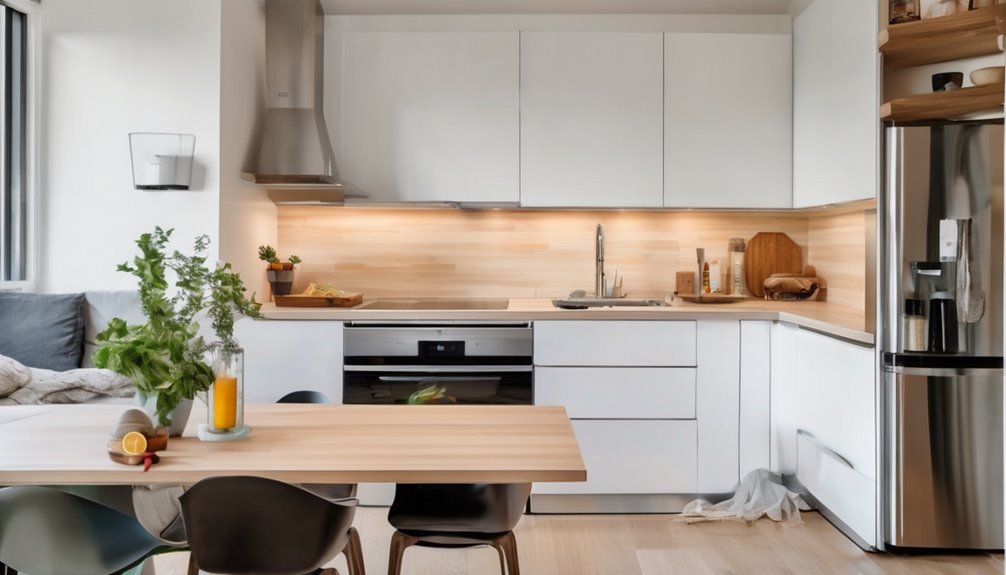
Here’s a quick, renter-friendly plan to cut kitchen energy use fast. Start with non-permanent upgrades: LED lighting, smart plugs, and efficient faucets to curb standby power and hot-water waste. Choose compact, Energy Star appliances and multi-function units for small kitchens, then pair them with smart thermostats to fine-tune energy use. Adopt simple habits like batch cooking, using lids, and full dishwasher loads. Track monthly bill changes and share results—more tweaks await beyond this guide.
Key Takeaways
- Prioritize low-cost, non-permanent upgrades like LED bulbs, smart plugs, and energy-efficient faucets to reduce energy use without landlord permission.
- Use compact, energy-efficient kitchen appliances and smart thermostats to optimize heating and track real-time consumption.
- Implement daily habits: batch-cook, use lids, match burner size, run full dishwasher loads, and rinse with cold or warm water.
- Build routine checks: unplug idle chargers, consolidate with a single power strip, and log usage to quantify savings.
- Leverage incentives and rebates: explore utility programs, landlord-approved upgrades, and track savings via monthly bill comparisons.
Budget-Friendly, Non-Permanent Upgrades for Renters
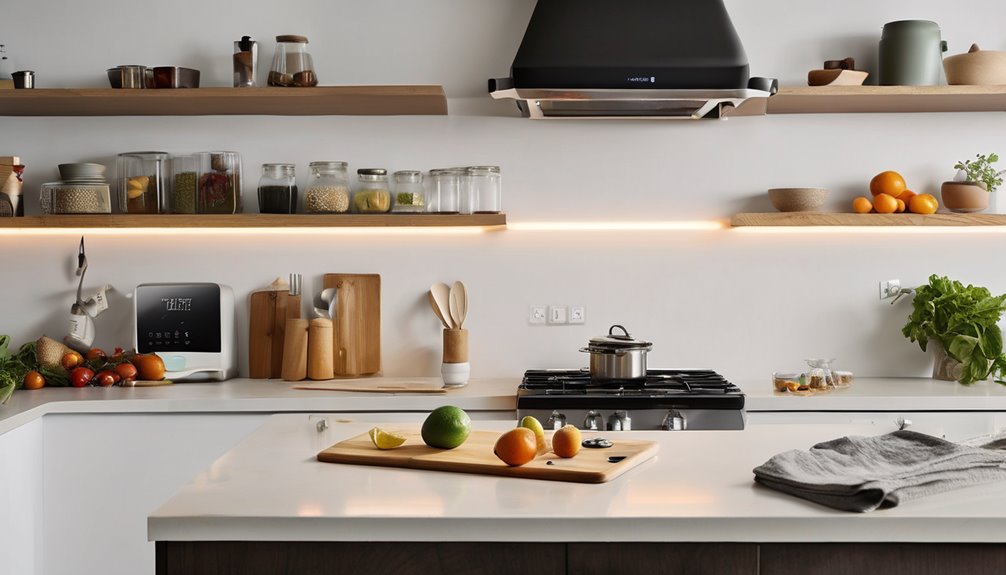
Many renters can cut energy use without committing to permanent changes. You’ll start with small wins that fit lease terms and budgets. Prioritize energy efficient cookware, which reduces heat loss and speeds cooking times, lowering your stove’s energy draw. Pair this with smart plugs for appliances to curb standby power and automate off times when you’re not using devices. Create a simple routine: unplug chargers, timers for HVAC fans, and a single power strip to consolidate, so you’re not guessing. Track efficiency gains by logging usage patterns and noting any changes in comfort or performance to build a clearer case for continued improvements energy savings.
Energy-Saving Appliances That Fit Small Kitchens
Could you optimize a small kitchen without sacrificing performance? You can, with purposefully chosen energy-saving appliances that fit small kitchens. Start with compact ovens that still deliver reliable cooking outcomes, saving counter space while using efficient heating elements and insulation. Pair them with smart thermostats to fine-tune energy use, track real-time consumption, and schedule heating when you’re home. When selecting devices, prioritize models with Energy Star ratings and small-footprint dimensions, so you maintain workflow without crowding your space. Look for multi-function units, like combo microwave-convection ovens, to reduce clutter. For dishwashing and refrigeration, choose energy saving appliances that fit small kitchens with efficient compressors and inverter motors. This approach lowers bills, supports comfort, and reinforces a sense of belonging in a power-conscious rental. Energy Star ratings help identify appliances that meet rigorous efficiency criteria and can guide your budget-friendly, space-conscious upgrades.
Must-Have Kitchen Gadgets for Lower Bills
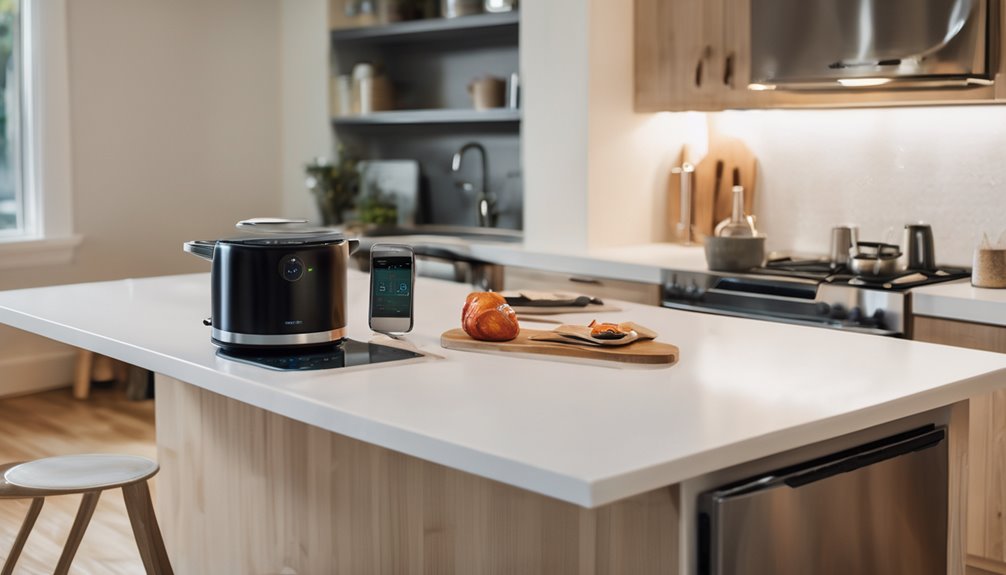
Are there small, practical gadgets that dramatically cut your monthly energy bill? You bet. Must-have kitchen gadgets focus on efficiency, not fluff, helping you feel like you’re in control. Use compact devices that optimize water and power use, like efficient water heating strategies and LED lighting, to lower costs without sacrificing comfort. Track results with simple, visible metrics and share tips with neighbors, building belonging through practical wins. Footrest integration can be analogous to how organizing kitchen accessories improves efficiency, mirroring how ergonomic chair design uses a retractable footrest to support prolonged use.
Simple Daily Habits That Slash Kitchen Energy Use
Small daily changes add up fast, especially after you’ve stocked up on efficient gadgets. You can cut energy use with simple habits you’ll actually stick to. For low energy cooking, plan meals to heat only what you’ll use, batch cook, and use lids to keep heat in. Match burner size to pot diameter to avoid wasted flame. When you load the dishwasher, run full loads, skip pre-rinse, and air-dry dishes when possible. For mindful dishwashing, rinse minimally and use cold or warm water instead of hot, saving energy while you stay confident you’re doing right by the planet. Keep exteriors clean of grease to reduce heat transfer in appliances, and preheat only when necessary. Tiny, consistent choices compound into meaningful savings you can feel daily. Stability and Noise
Costs, Incentives, and How to Measure Savings
What will your money and time save look like when you upgrade your kitchen on a renter-friendly budget? In this section, you’ll see clear costs, incentives, and how to measure savings tips. Start with upfront costs for affordable, non-permanent fixes—LED bulbs, smart plugs, and efficient faucets—to keep investment low. Explore available costs incentives from utility programs and landlord-approved upgrades, such as added insulation or energy-efficient appliances, and track any rebates or tax credits you can claim. Use a simple, repeatable method to measure savings: compare monthly energy bills before and after changes, calculate payback periods, and note non-monetary gains like reduced heat loss and faster cooking times. Document results in a shared plan to feel supported and build community around smarter choices. Energy-efficient upgrades can also increase comfort and property value over time.
Frequently Asked Questions
Can Renters Install Solar or Other On-Site Energy Systems?
Renters can’t typically install solar or on-site energy systems themselves, but you can pursue feasible options. Consider portable solar chargers or community solar programs and ask for landlord permission where applicable. If you rent, explore energy storage rentals or grid-tied in-store programs offered by utilities. This approach supports your energy goals, keeps you compliant, and fosters belonging with neighbors who’re chasing similar savings. Use solar installation pilots or incentives to inform your next lease discussion.
Are There Health or Safety Concerns With Energy-Smart Upgrades?
Yes, there are health safety concerns you should respect. You must follow installation rules, use rated components, and avoid DIY alterations that could create fire or electrical hazards. Prioritize proper ventilation, avoid gas or propane if not verified safe, and keep moisture away from electrical outlets. Maintain clear labeling and turn off power before work. If in doubt, consult a licensed pro. Health safety matters protect you and others in your home.
How to Compare Energy Savings Across Different Appliances?
Comparing efficiency, you’ll want a consistent framework: compare labeled EER/SEER, annual energy use, and upfront cost. You’ll assess payback by dividing the price delta by annual energy savings, then consider maintenance. You’ll normalize for usage patterns, verify with real-world specs, and track changes over time. You’ll widen your view to total cost of ownership, avoid phantom loads, and prioritize appliances with clear energy data. You’ll stay data-driven, concise, and confident.
Do Landlords Permit Temporary Energy-Related Improvements?
Yes, landlords may permit temporary improvements, but it varies by lease and jurisdiction. Start by asking for landlord permissions in writing, and propose specific, reversible upgrades that don’t alter structure. Highlight energy savings data, potential rent impact, and return conditions. If permissions are granted, document timelines, costs, and removal plans. Be transparent about warranties and safety. With clear, collaborative communication, you’ll increase the odds of approval and achieve measurable, data-driven efficiency.
What Are the Long-Term Maintenance Costs of LED Upgrades?
LED upgrades typically incur modest, predictable long term costs, mainly bulb replacements and driver checks. Expect maintenance timing to average 5–10 years for most LEDs before lumen depreciation or driver issues arise, with occasional cooling-fan or dimmer adjustments. Your total long term costs stay low if you choose reputable brands and schedule annual checks. You’ll save on energy, feel supported, and stay connected with neighbors who value efficient living. Keep records and monitor performance quarterly.