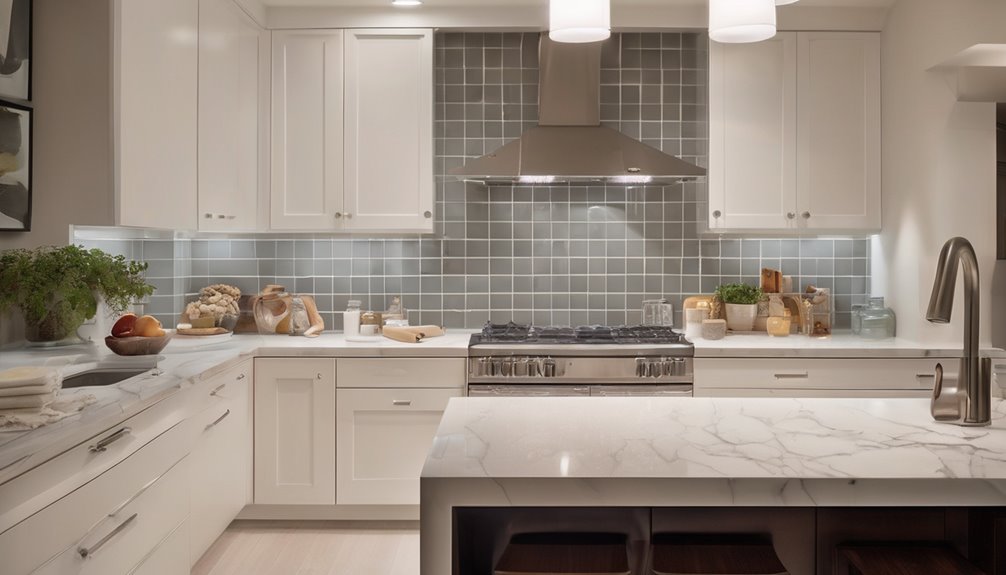
For low-cost DIY kitchen lighting, start with a simple plan that targets three layers: ambient baseline, focused task light, and restrained accents. Choose high-CRI LED fixtures in 2700–3000K, preferring slim or recessed designs to minimize clutter, and add under-cabinet bars or puck lights with dimmers for even counter washes. Plan layout before mounting, test brightness in each zone, and route power to a nearby outlet. You’ll gain cohesive warmth and flexibility without rewiring, with more practical tips ahead.
Key Takeaways
- Start with high-CRI LED fixtures and slim, low-profile designs to keep glare and clutter minimal.
- Use under-cabinet LED strips or puck lights with diffusers for even counter wash and simple installs.
- Implement dimmers and warm color temperature (2700–3000K) for flexible, cozy ambience without rewiring.
- Plan zones (prep, cooking, cleaning, dining) to target tasks and reduce unnecessary fixtures.
- Opt for modular, scalable kits and plug-in options to upgrade gradually with minimal cost and effort.
Assess Your Kitchen’s Lighting Needs
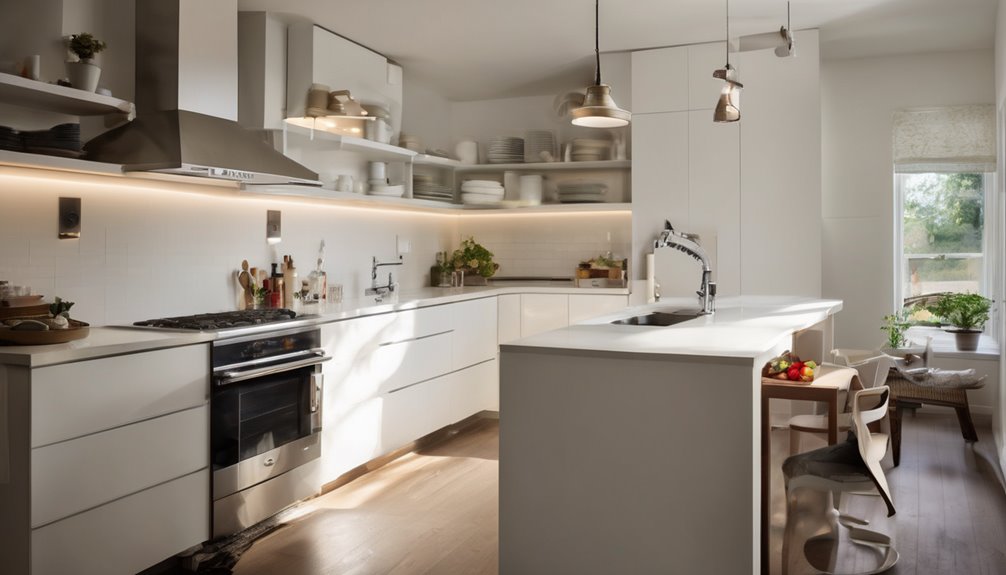
Evaluating your kitchen’s lighting needs starts with a clear picture of how you use the space. You’ll assess lighting by mapping zones: prep, cooking, cleaning, and dining. Identify glare, shadows, and color rendering needs for each zone, then align them with task, ambient, and accent layers. To assess lighting effectively, you’ll measure current brightness in lux, note fixture placement, and consider ceiling height. Prioritize flexibility: dimmers, adjustable color temperature, and scalable fixtures that support future tasks. Document existing limits, such as dark corners or under-cabinet shadows, and set practical targets that match your routines and aesthetic. This method keeps your kitchen cohesive, enhances efficiency, and clarifies what to upgrade first, ensuring your kitchen needs are met deliberately.
Kitchen Lighting: Budget-Friendly Fixtures That Brighten the Space
You can start with budget-friendly fixtures that deliver clear, functional light without overspending. Consider brightness levels and color temperature to balance task needs with ambience, using LED options for efficiency. We’ll compare fixture types and placement to maximize perceived brightness while keeping costs down. 5-year warranty
Budget-Friendly Fixtures
If you’re upgrading on a budget, start with versatile, high-CRI LED fixtures that deliver bright, even light without hotspots. Prioritize slim, recessed or surface-mount designs to minimize visual clutter while maintaining coverage. Choose fixtures with dimming capability and a consistent color temperature around 2700–3000K for cohesive warmth. For under-cabinet tasks, select linear bars or puck lights with diffused lenses to reduce glare. Compare lumen output per watt to ensure efficiency without sacrificing clarity. Install in zones: cooking, prep, and plating, pairing general illumination with targeted task light. Favor modular kits that scale as your kitchen evolves. two word discussion idea one, two word discussion idea two, anchor your plan in compatibility, ease of installation, and long-term reliability. linkable concept
Brightness and Ambience Choices
To get the most from budget-friendly fixtures, prioritize brightness uniformity, color accuracy, and controllable ambience. You’ll want consistent light distribution across work zones, minimizing hot spots that disrupt focus. Choose color temperatures near 3000–3500K for a warm, inviting kitchen, then layer with higher-CCT accents if needed for task zones. For brightness ambience, balance general illumination with directed task lighting so you can switch moods without sacrificing visibility. Consider tunable LEDs or simple dimmers to adjust intensity, preserving energy efficiency. Ensure CRI is 80+ for true color rendering on foods and finishes. Plan your layout around primary workflows, alternating task mood with dimmed, warm secondary lights during casual meals. This approach layout optimization ensure belonging, enabling you to customize scenes while staying budget-conscious.
How to Choose Efficient Kitchen Bulbs for Brightness and Longevity
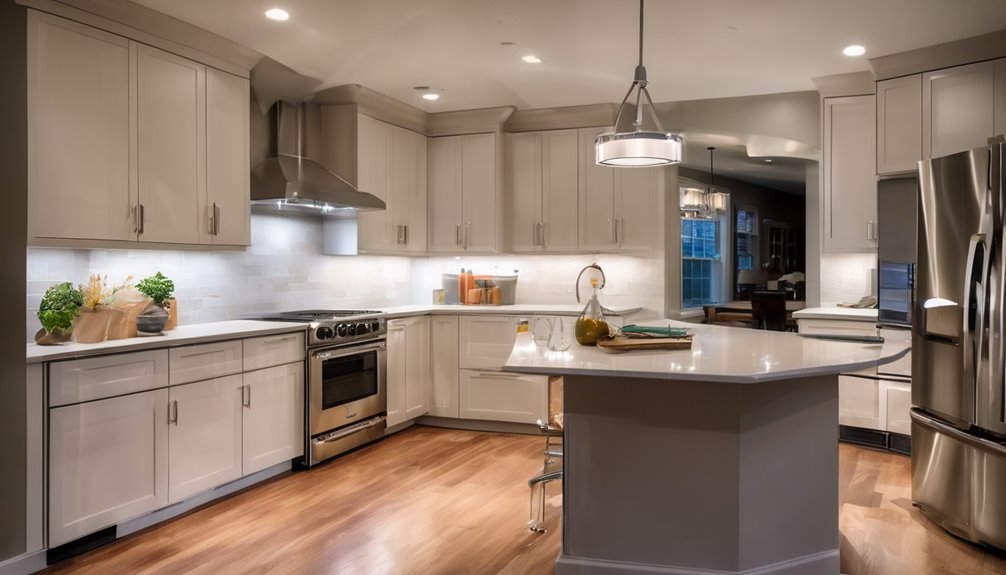
Choosing efficient kitchen bulbs hinges on matching brightness needs with longevity and cost. You’ll want a clear lumen target for task areas (counterwork, prep zones) and softer output for dining nooks, then compare wattage to achieve that brightness with lower energy use. Prioritize high energy efficiency labels and look for bulbs with consistent color rendering (CRI 80+). For longevity, check rated life in hours and expected maintenance windows, then factor in bulb longevity vs replacement cost. Favor LEDs over incandescent or halogen for longer life and steadier performance; avoid bulbs with excessive heat buildup that can shorten life in enclosed fixtures. Confirm dimmability if you have controls, and verify compatibility with existing fixtures to minimize waste and optimize overall efficiency. In designs like multi-zone kitchens, dual-basket configurations can inform how you plan separate lighting zones to keep energy use aligned with distinct task and dining needs.
DIY Under-Cabinet and Accent Lighting: Step-by-Step Install
Need better task lighting under cabinets without a wired mess? Here’s your clean, repeatable install plan. Plan placement first: align under-cabinet fixtures to illuminate workspace without glare, and reserve accent lighting to highlight textures, not overpower the room. Choose low-profile LED strips or plug-in puck lights with dimming, plus a simple surface outlet or inline driver. Mount aluminum channels or adhesive-backed mounts for durability and heat management. Run a single, routed power path to a close outlet or a discreet power strip; keep cables under trim or behind toe-kicks. Connect per manufacturer instructions, verify color temperature consistency, and test brightness levels at work zones. Secure all components, label switch positions, and enjoy cohesive under cabinet lighting and subtle accent lighting.
Budget-Smart Lighting Ideas for Kitchens (No Smart-Home Price Tag)
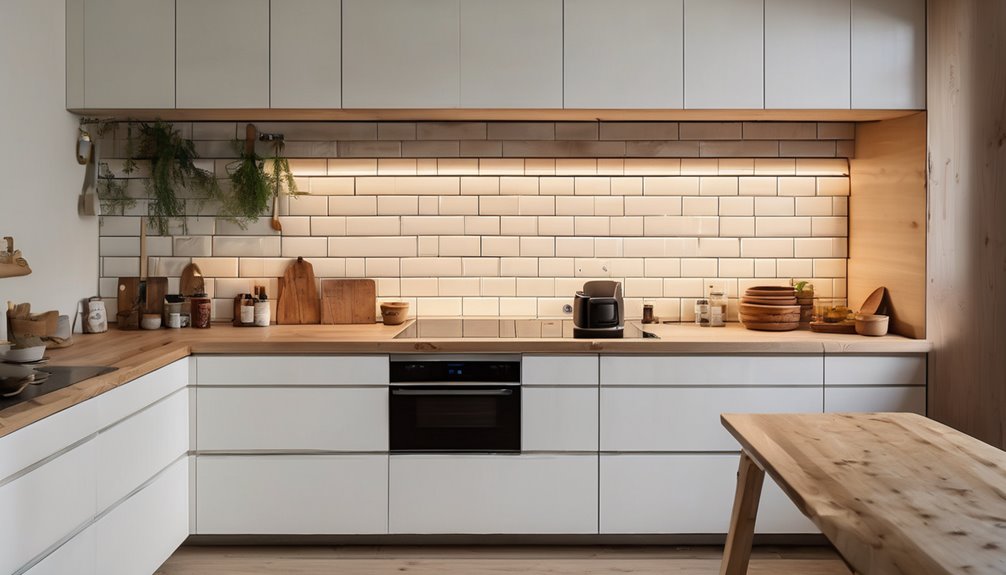
You can start with budget-friendly fixture tips that maximize light output without overspending, choosing proven performance over flashy models. Build your scheme around layered lighting concepts—ambient, task, and accents—to ensure even coverage and reduced glare. For quick installs, prioritize fixtures that offer simple mounting, universal sockets, and compatible dimming options to adapt as needs change. Energy-efficient options can further extend savings by reducing long-term power use.
Budget-Friendly Fixture Tips
Smart kitchens demand practical fixtures, so start with budget-friendly options that deliver both glare control and task lighting without breaking the bank; prioritize widely available, low-cost fixtures like LED under-cabinet bars, surface-mounted ceiling lights, and simple replaceable bulbs to maximize efficiency and ease of installation. You’ll appreciate quick upgrades that maintain color consistency and minimal heat output, reducing glare while preserving true-tog color for prep. Choose fixtures with diffusers that avoid hotspots and ensure uniform spread across counters. For installation, favor plug-in or low-voltage options to minimize wiring. Embrace modularity: mix undercabinet hacks with ceiling mounts to adapt zones as tasks shift. Budget fixtures, careful layout, and reliable replacement parts make your kitchen feel coordinated and inclusive, not temporary. A quick calibration of lighting zones can improve color accuracy across the workspace and support consistent task lighting during long prep sessions color accuracy and reliable replacement parts help sustain a cohesive look over time.
Layered Lighting Concepts
Layered lighting in a budget-smart kitchen means combining ambient, task, and accent layers without complicating the wiring or inflating costs. You’ll design with three goals: even illumination, practical control, and minimal components. Ambient lighting sets the baseline, using a single, wide-beam fixture or recessed downlights placed to avoid shadows. Task lighting concentrates where you cook and prep, such as under cabinets or over islands, delivering higher color rendering and focused brightness. Accent lighting highlights features or textures, but keep it restrained to prevent visual clutter. Be aware of short lived bulbs and uneven color that can undermine mood and accuracy in food prep. Choose reliable luminaires and consistent color temperatures; test layouts before final mounting to ensure safe, cohesive layering. Energy-efficient options can further reduce ongoing costs while maintaining quality light.
Quick-Install Upgrades
Quick-Install Upgrades: budget-smart ideas for kitchens can deliver noticeable gains without a full retrofit. You’ll gain immediate visibility with minimal effort, focusing on practical, repeatable improvements that feel collaborative and accessible.
- under cabinet strips: choose high-CRI LED tape, install with quick-connects, and realign for even wash on counters.
- task lighting halos: add small, directable fixtures to work zones, avoiding glare and shadows.
- plug-in desk lamps: position near prep areas for supplemental glow, plug-and-rotate as needs shift.
- color-balanced upgrades: select 2700–3000K temps for warm, inviting tones that unify cabinets and countertops.
These moves emphasize under cabinet and task lighting, delivering cohesive results without rewiring. You belong in the kitchen with brighter, smarter illumination.
Troubleshooting Common Budget Kitchen Lighting Fixes
When your budget kitchen lighting isn’t performing as promised, start with the basics: confirm power at the fixture, verify the switch is functioning, and check for loose connections. If symptoms persist, test for voltage at the fixture with a multimeter, and inspect dimmers for compatibility with LED lamps. Replace incompatible components only after confirming upstream supply is stable. Consider bulb type, noting that color rendering matters; mismatched LEDs can skew hues, making food appear inappropriate. Audit fixture housings for dust or heat buildup, which can reduce efficiency and lifespan. Reassess budgeting choices by comparing brightness (lumens) and efficiency (lm/W) against intended tasks. Document fixes, note any recurring failures, and choose standardized parts to minimize future budgeting mistakes while preserving consistent color rendering across zones. 5-speed hand blenders and variable-speed models from reputable brands demonstrate how performance and control translate to practical kitchen upgrades, aligning light task needs with dependable, budget-minded purchase choices.
Frequently Asked Questions
How Can I Measure Kitchen Light Distribution Accurately?
Answer: You measure kitchen light distribution by mapping lux across the work zones, then charting uniformity. Start by using a calibrated lux meter, placing it on a grid at working heights; record values at key points: prep, sink, and stove. Build a distribution map, note hotspots and shadows, and calculate minimum, maximum, and average lux. Repeat after bulb changes. This helps you gauge consistency and plan fixtures for even coverage.
What’s the Best Color Temperature for Cooking Tasks?
For cooking tasks, aim for a color temperature around 3500–4000K—the best color range for clarity and true-food perception. You’ll notice whites look neutral, not yellow or blue, helping you distinguish fresh ingredients. If you prefer a warmer vibe, 2700K is acceptable but may blur some details. Choose a CRI of 90+ for accurate color rendering. Balance task lighting with ambient warmth, ensuring you feel confident, connected, and you belong in a well-lit kitchen.
Are LED Drivers Compatible With All Fixtures?
“Time is money,” you’ll learn quickly: no, LED drivers aren’t universally compatible with all fixtures. You must check driver current, voltage, type (constant current vs. constant voltage), and wattage ratings against your fixture’s specs. Look for fixture compatibility notes, dimmer compatibility, and whether an LED driver is integral or external. When in doubt, choose standard 24–36 V or 350–700 mA drivers and verify UL/CE approvals for safe, reliable performance.
How Do I Avoid Shadows on Countertops Efficiently?
To avoid shadows on countertops efficiently, implement shadow free task lighting with strategically placed fixtures. Use glare reduction placement: position under-cabinet LEDs 6–12 inches below cabinet lips and offset central lines to minimize wall and ceiling reflections. Add diffusers or frosted lenses for even distribution. Keep lumen levels balanced across zones, and rotate task lights as you work. This precise setup fosters comfort, control, and a sense of belonging in your kitchen workflow.
What Maintenance Schedule Extends Fixture Life?
A steady maintenance cadence extends fixture life by preventing dust buildup, overheating, and sporadic performance. You should inspect and clean fixtures quarterly, replace aging components promptly, and verify connections biannually. Document lamp hours and filter changes to track wear, and test dimming and switches monthly. Prioritize high-heat areas with proper ventilation. This disciplined routine supports component longevity, reduces failures, and helps you feel you belong to a trustworthy, technically proficient community.